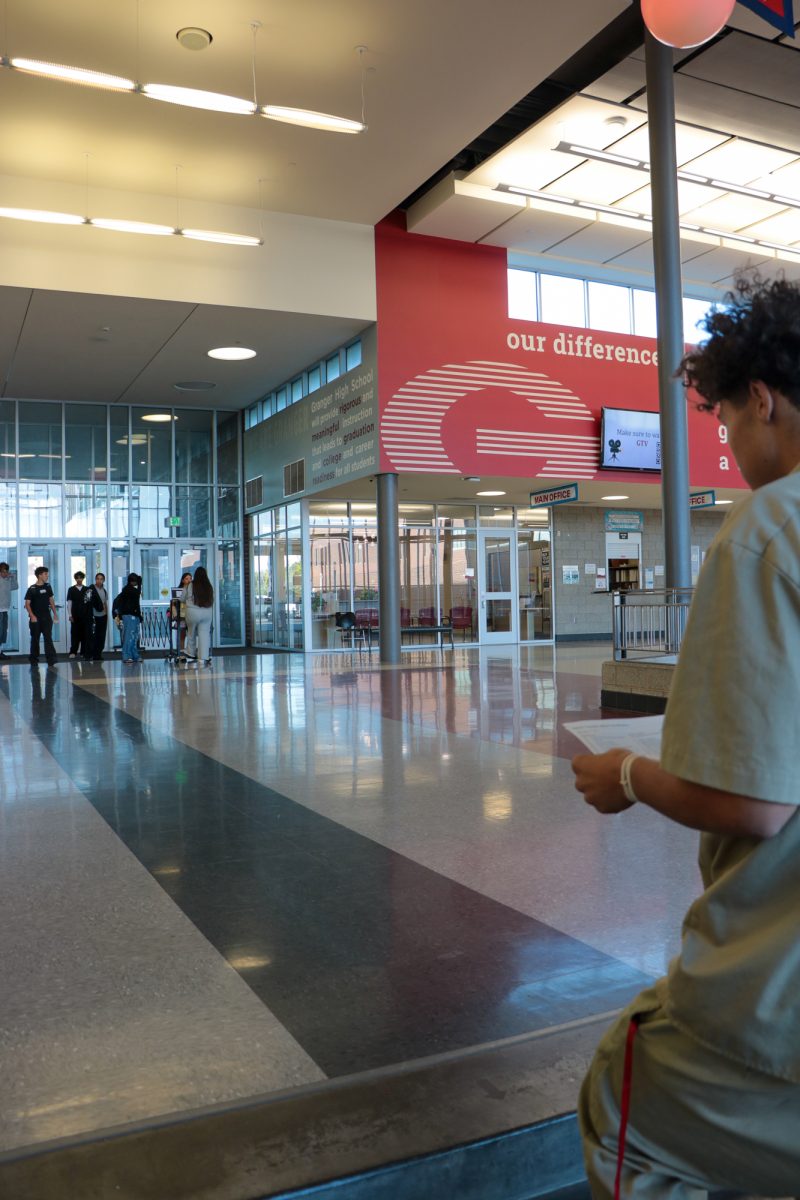


At its peak, Granger High School enrolled approximately 3,500 students. Today, that number has dropped by roughly 1,000 students, largely driven by declining birth rates across the state. According to reports from FOX 13 and KUTV 2 News, Utah’s traditionally high birth rate is dropping, leading to lower school enrollment. The enrollment shift led to district staffing adjustments last spring and reduced teaching positions at Granger, leaving remaining core classes filled.
“Oh, absolutely,” Mr. Keyes, a history teacher, said when asked if teaching larger classes presents challenges.
Keyes says larger class sizes increase classroom chaos and make it harder to learn students’ names or keep them focused.
“There are too many students in one classroom, and there are not enough teachers,” Keyes said.
Keyes says student enrollment will likely continue decreasing over the next decade before potentially rebounding.
Ms. Gonzalez, an English teacher, says larger classes have not caused major disruptions, but minor complications affect daily instruction.
“Things went a lot smoother last year,” Gonzalez said.
Gonzalez says helping students individually has become harder because more students need assistance during class periods.
For seniors, crowded classrooms create scheduling barriers alongside instructional delays.
“They put me in a lot of classes I didn’t need,” Jaykob Smith (12) said.
Smith says he was assigned to unwanted art classes instead of required credits, including a business class when he needed financial literacy. When he attempted to adjust his schedule on Mass Class Change Day, counselors informed him the necessary core courses were already at capacity. Smith says packed classrooms make it harder to focus and receive individual attention from teachers.
As lower enrollment reshapes school staffing, students and faculty continue navigating crowded core classrooms and reduced course availability. Students should remain flexible as new sections open and schedules change.