
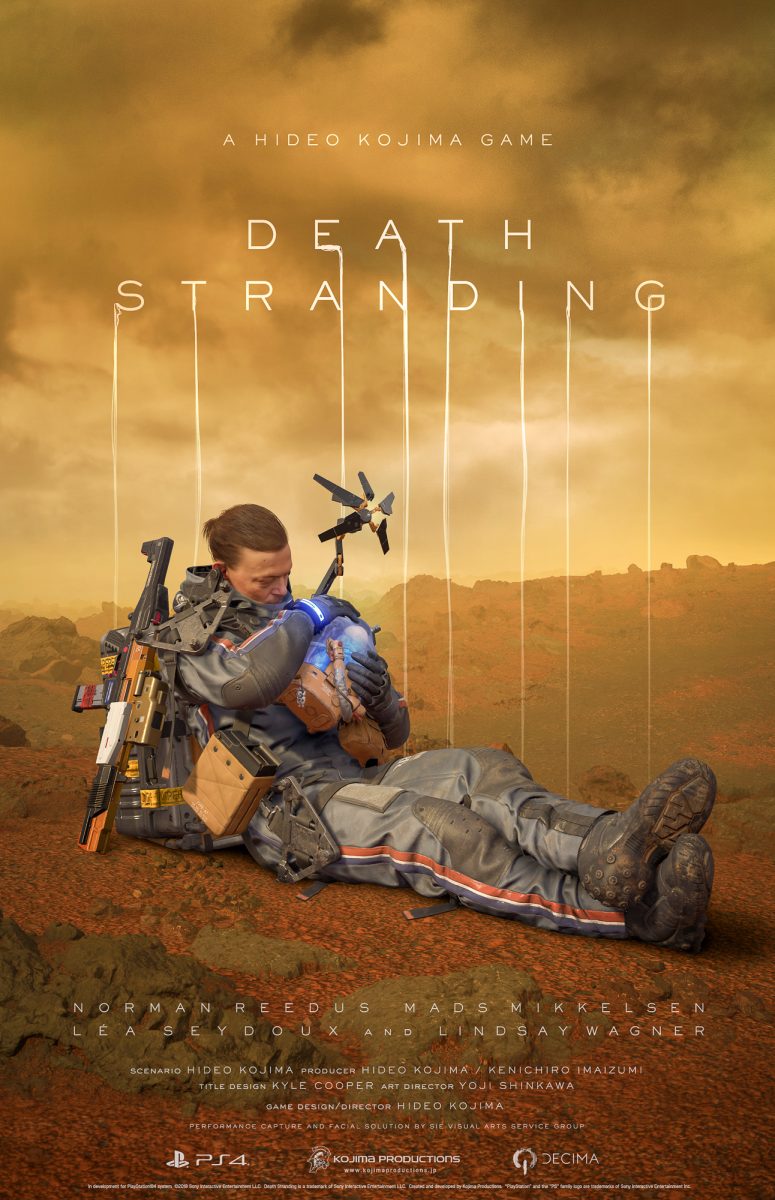
HIDEO Kojima is a legendary game designer, most known for his Metal Gear series. His writing is famously wacky and almost nonsensical. In 2019, he released a game called “Death Stranding,” which shook the gaming industry with its strange story and bold gameplay. Death Stranding is a game where the player’s sole objective is to walk across America, connecting people in a ‘chiral network’ along the way. It’s gone down as one of his best and most interesting works, and in 2025, it got a sequel, which was released exclusively on PS5 until March 2026, when it was finally ported to PC.
The story of Death Stranding is set in a post-apocalyptic world after an event known as the death stranding, where most of the world died and went to ‘the beach.’ The world is now infested with these ghostly entities known as BTs, beached things, that form huge puddles of tar and drag victims in an attempt to consume them. The world is shattered and disconnected, and everyone is afraid to leave their homes for fear of causing a voidout, in which a massive crater appears when a BT successfully consumes someone. The world relies on people called porters, who dedicate themselves to delivering packages to what’s left of the world.
You play as Sam Porter Bridges, a porter in the ruins of America. Your mission is given by an organization known as Bridges, which works with the new government, the United Cities of America. Using a technology known as the chiral network, along with a Bridge Baby named Lou (a 7-month-old fetus in a pod used by porters to detect BTs), you are assigned to visit each city across America and connect them, uniting everyone and providing the resources they need to survive.
Death Stranding 2 picks up shortly after the first game. The chiral network is now expanding into Mexico, and it was soon discovered that an anomaly called a plate gate appeared there shortly after Sam connected America, allowing seamless travel to Australia. Using this plate gate, Drawbridge, an organization to replace the old Bridges, enlists Sam’s help once more to connect Australia to the chiral network.
The gameplay of Death Stranding stays mostly the same between the two games. You are given an order, you load up your backpack, and you start walking over. Along the way, there are several dangers you must plan for beforehand. You can bring ladders, ropes, construction devices to build bridges and shelters, weapons, vehicles, and many more. The rain, now called timefall, causes things to age quickly, which will deteriorate your cargo if you aren’t fast enough. Bandits and BTs are scattered throughout, and the terrain can be difficult to traverse. These challenges create a unique gameplay experience where every journey feels unique.
I highly recommend both Death Stranding 1 and 2; these games are not for everyone. They are slow and quiet for the most part. It’s commonly described as a walking simulator, and much of the satisfaction comes from enjoying the quiet world Kojima crafted. The story is great, but it can be hard to follow and sometimes doesn’t make much sense. If this all sounds like your cup of tea, or if you’ve enjoyed some of Kojima’s works in the past, then you will love these games just as much as I did.